Every dispensed medicine carries two sets of information: the manufacturer's printing on the box, and the pharmacy label stuck on it. They do different jobs. The manufacturer's box tells you what the medicine is, its strength, and its expiry. The pharmacy label tells you what you have been told to do with it. Where the two appear to disagree about how to take it, the pharmacy label wins - it reflects your prescriber's instruction, which may deliberately differ from the standard.
What is on the pharmacy label
- Your name. Check it. Dispensing errors are uncommon but they happen, and the counter is the place to catch one.
- The medicine name and strength. Usually the generic name.
- The quantity dispensed.
- The directions - how much, how often, and any special instructions.
- Warning labels, such as those about drowsiness or completing the course.
- The date and the pharmacy's details.
If the directions say something different from what you remember being told, ring the surgery or ask the pharmacist rather than guessing. It is a two-minute call and it is exactly the sort of query pharmacies expect.
The strength, and why it matters more than the name
The strength is the number after the medicine name. It is the part people overlook and the part most worth checking, because the same medicine comes in several strengths and the tablets look different between manufacturers.
If your strength has changed without anyone mentioning it, query it before you leave. If your tablets look different but the name and strength match, that is almost certainly a different manufacturer - our guide to why your tablets look different covers when that matters and when it does not.
Letters after the name
Suffixes are not decoration. MR, SR, XL, LA, CR, PR and Retard all indicate a modified-release formulation designed to release the drug gradually. EC or "gastro-resistant" means an enteric coating.
These must not be crushed or split - doing so can deliver a whole day's medicine at once. Our guide to cutting and crushing tablets explains why, and why a score line is not a general permission.
Common phrases decoded
- "When required" or PRN - take only when you need it, up to the stated maximum.
- "Take with or after food" - during or shortly after a meal.
- "On an empty stomach" - usually an hour before or two hours after eating.
- "Complete the course" - finish it even once you feel better.
- "Do not drink alcohol" - ask whether this is an absolute or a caution, since the two look identical on a label. Our guide to medicines and alcohol covers the difference.
- "May cause drowsiness" - do not drive until you know how it affects you.
- "For external use only" - not to be swallowed, ever.
Expiry dates, and the other date
The expiry on the box is the point up to which the manufacturer guarantees potency and stability in the unopened original packaging. After that, a medicine is more likely to have lost strength - which matters most for anything you might need urgently, such as a reliever inhaler, a GTN spray or an adrenaline auto-injector.
Several products have a second, shorter limit once opened: eye drops are typically discarded within a set number of weeks, liquid antibiotics have a short life once made up, and GTN tablets lose potency after the bottle is opened. Write the opening date on the box - nothing else will remind you.
Our guide to where to keep your medicines covers why storage conditions affect how long any of this holds.
The leaflet inside
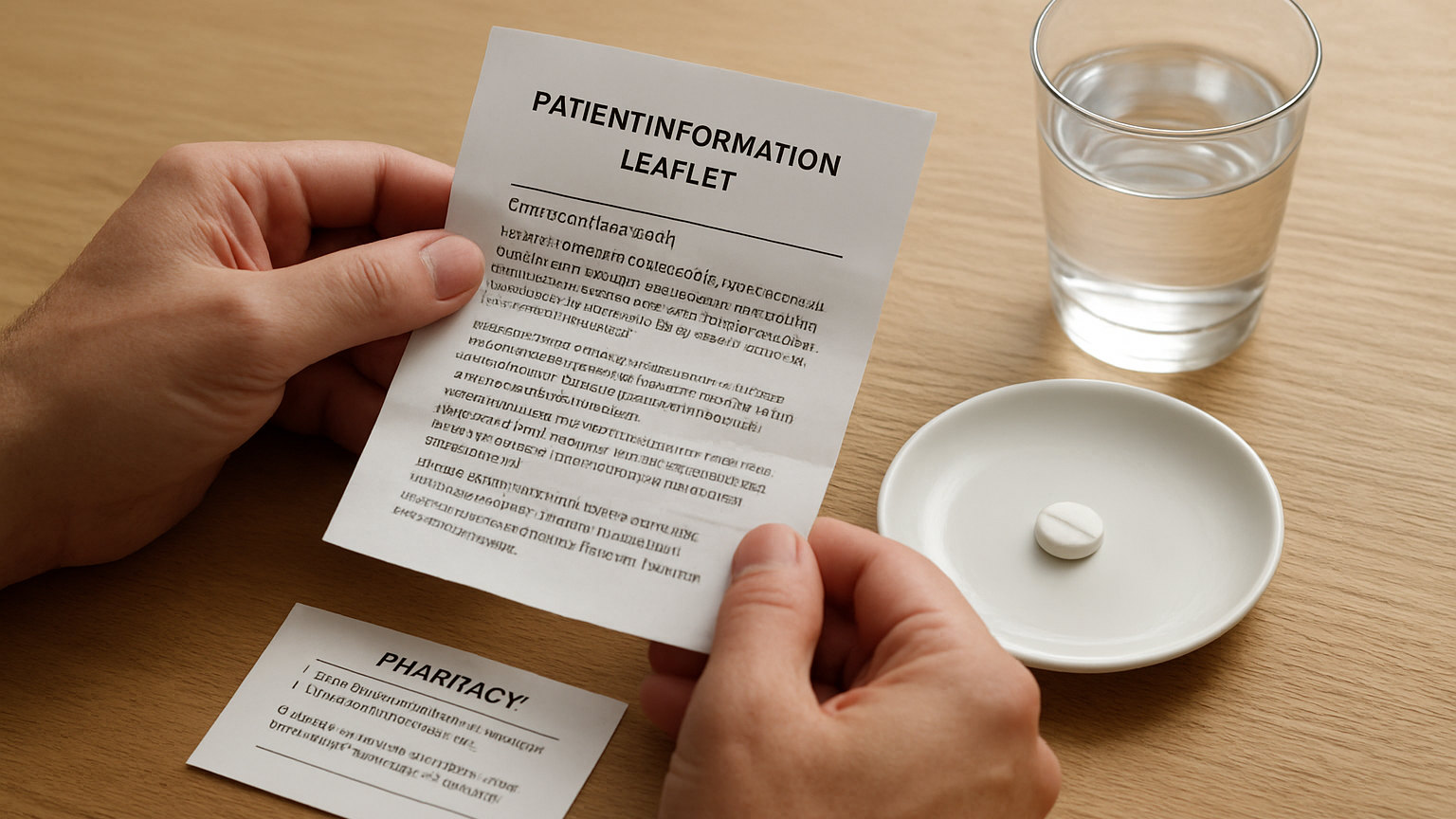
The patient information leaflet is the authoritative source for your medicine, and it is worth keeping. The sections most people skip are the useful ones: what to do if you forget a dose, food and drink, driving, and the frequency descriptions against each side effect.
Those frequency words matter. A long list frightens people, but "very common" and "very rare" are doing entirely different work, and the list covers everything reported during trials rather than everything likely.
What to check before you leave the pharmacy
- Is my name on it?
- Is this the medicine and strength I expected?
- Do the directions match what I was told?
- Have I got everything I ordered?
- Is there anything I should know about taking this with my others?
That last question is worth asking every time something new is added. Pharmacists check interactions against your record, but they can only check what they know about - which does not include anything you have bought yourself, as our guide to over-the-counter interactions explains.
More on taking medicines day to day in the Usage section, including Eye Drops and Ear Drops: How to Use Them.